How to Prevent Cavities: The Complete Evidence-Based Guide
Cavities are not inevitable. Learn the science of enamel demineralization, how to stop acid attacks, and effective preventive protocols for adults and children.
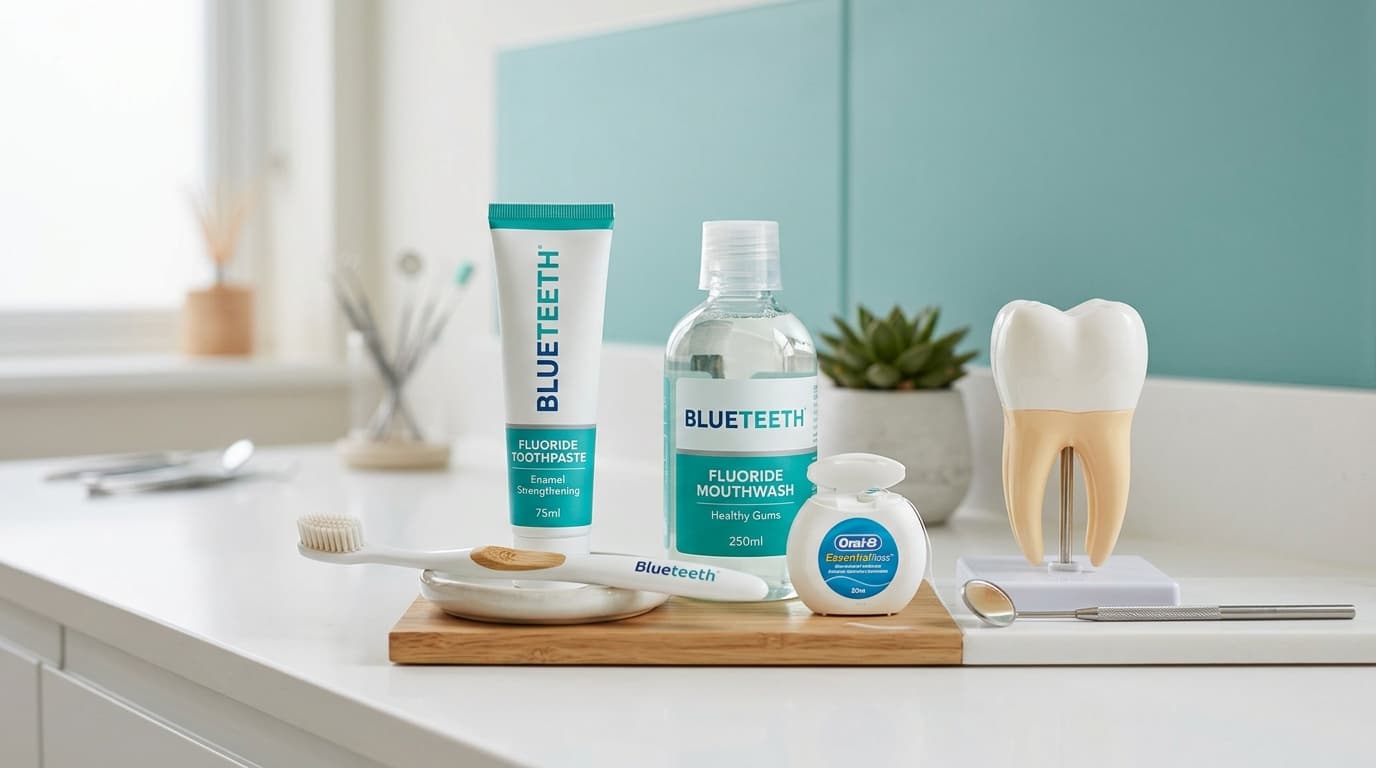
Blueteeth cavity prevention essentials including fluoride toothpaste, soft toothbrush, dental floss, and mouthwash
Cavities are prevented by maintaining the balance between demineralization and remineralization. Brush twice daily with fluoride toothpaste, floss daily, limit the frequency of sugar and carbohydrate snacking, drink fluoridated water, and visit your dentist regularly for professional cleanings and fluoride varnishes.
The Caries Equation: How Cavities Actually Form
Dental caries (tooth decay) is an infectious, transmissible disease driven by four interacting factors: susceptible tooth enamel, cariogenic bacteria (such as Streptococcus mutans), fermentable carbohydrates (sugars), and time.
Whenever you consume dietary carbohydrates, bacteria metabolize sugars into lactic and acetic acids within 2 to 5 minutes. When the mouth’s pH drops below the critical threshold of 5.5, hydroxyapatite minerals dissolve out of enamel. Saliva neutralizes this acid over 30 to 60 minutes and redeposits minerals. Cavities develop only when demineralization consistently outpaces remineralization.
The Remineralizing Power of Fluoride
Fluoride replaces hydroxyl ions in tooth enamel to form fluorapatite, a mineral crystalline structure that resists acid dissolution down to a pH of 4.5 (far more resistant than natural enamel).
To maximize fluoride protection:
• Use toothpaste containing at least 1,000 to 1,450 ppm fluoride.
• Avoid rinsing with plain water immediately after brushing; allow the residual fluoride layer to remain on teeth.
• In high-risk individuals, dentists can apply 5% sodium fluoride varnish (22,600 ppm F) every 3 to 6 months.
Dietary Frequency vs Total Sugar Intake
From a cariology standpoint, HOW OFTEN you consume sugary or starchy snacks is far more damaging than the quantity consumed at a single meal.
Sipping a sugary iced coffee over 4 hours exposes your teeth to continuous acid attacks, keeping the oral pH below 5.5 throughout the day. Eating the same treat with a main meal allows your stimulated mealtime saliva to rapidly buffer acids and protect your enamel.
- Limit between-meal snacking on refined carbs, crackers, dried fruits, and sodas.
- Chew sugar-free gum containing xylitol after meals to stimulate salivary flow and inhibit Streptococcus mutans growth.
Dental Sealants: Protective Armor for Molar Grooves
The deep anatomical pits and fissures on the biting surfaces of permanent molars are narrower than a single toothbrush bristle, making them the site of over 80% of childhood cavities.
Dental sealants are thin, biocompatible resin coatings painted onto these biting surfaces. Clinical trials show sealants reduce cavity risk in molars by almost 80% over two years.
Frequently Asked Questions
Scientific References & Sources
Our content is strictly synthesized from peer-reviewed dental literature, clinical practice guidelines, and leading academic institutions.
- Evidence-Based Clinical Practice Guideline on Nonrestorative Treatments for Carious Lesions — Journal of the American Dental Association (2023)
- Fluoride and Dental Caries Prevention: Mechanisms of Action and Clinical Efficacy — Caries Research (2024)
Preventive Fluoride & Sealant Therapy
Protect your family’s teeth from decay. Schedule preventive exams and sealants at Blueteeth Dental Care.
Related Dental Health Guides
How to Brush Your Teeth Properly: Step-by-Step Dental Guide
Master the Modified Bass brushing technique with dentist-approved steps to clean every tooth surface, protect delicate gums, and prevent plaque buildup.

Dental Fillings Explained: Composite vs Amalgam vs Ceramic
Cavity detected? Learn how dental fillings halt tooth decay, restore bite function, and compare modern tooth-colored composite with traditional materials.

Tooth Decay: Causes, Stages, Symptoms and Prevention
Tooth decay is a progressive bacterial disease. Understand the 5 stages of caries progression, early warning symptoms, and how to stop it in its tracks.