How Often Should You Visit a Dentist? The Science of Dental Checkups
Is the six-month dental visit rule right for everyone? Learn how dental professionals evaluate individual risk factors to customize recall intervals.
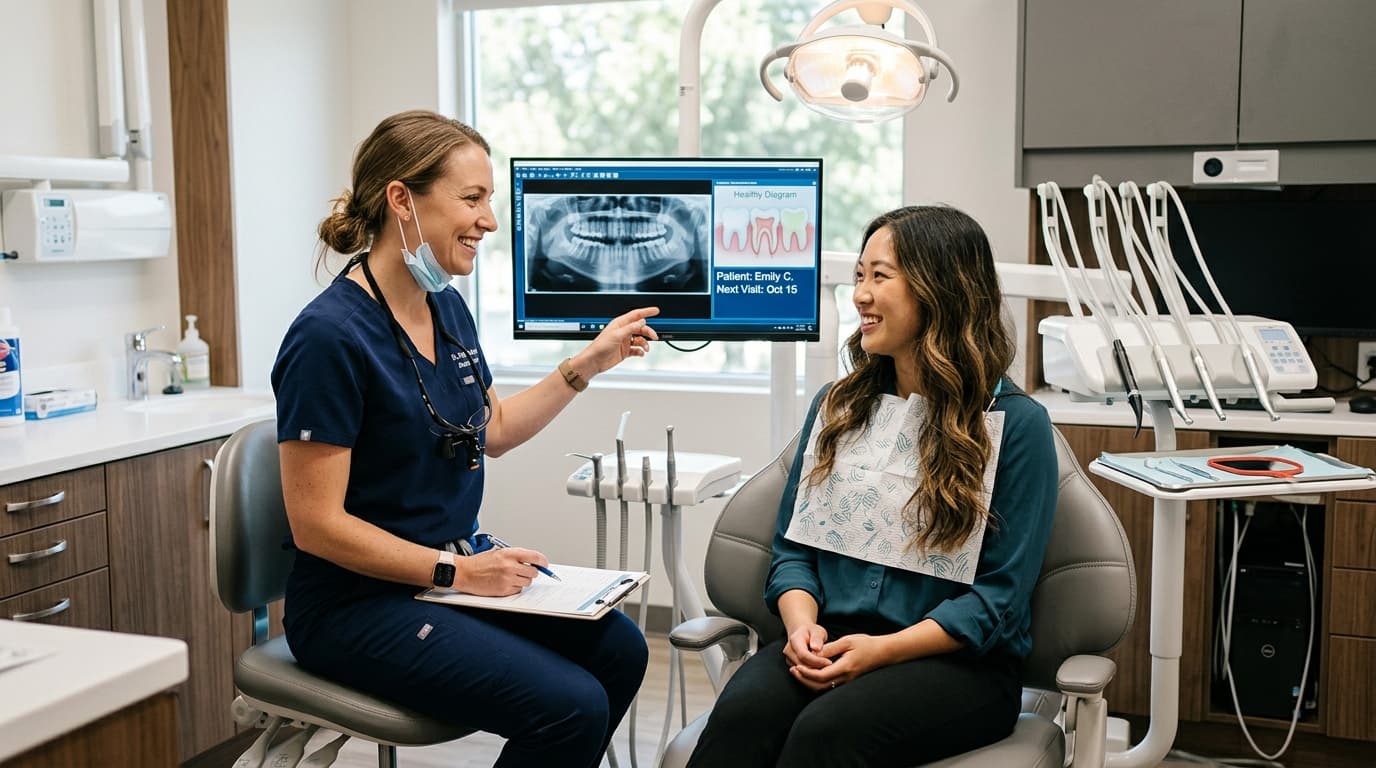
Dentist conducting a comprehensive routine oral examination and consultation in clinic operatory
Most healthy individuals should visit a dentist every 6 months for a routine checkup and professional cleaning. However, high-risk patients (smokers, diabetics, those with active gum disease, or prone to rapid cavities) should visit every 3 to 4 months.
The Origin of the 6-Month Rule
The traditional recommendation to visit the dentist every six months originated over a century ago. Today, modern dentistry utilizes risk-based recall intervals tailored to each patient’s unique oral microbiome, systemic health, and lifestyle.
Early-stage dental problems like demineralizing cavities, hairline tooth fractures, gingivitis, and early oral cancer lesions are almost completely painless. By the time a tooth begins to throb, nerve damage has usually occurred, requiring root canal therapy or extraction rather than a simple preventive treatment.
What Actually Happens During a Comprehensive Dental Exam
A modern routine dental visit is much more than just looking for holes in teeth. It involves a multi-point clinical evaluation:
- Oral Cancer Screening: Visual inspection and palpation of lips, tongue, cheeks, palate, and lymph nodes for pre-cancerous lesions.
- Periodontal Pocket Probing: Measuring the depth of gum pockets around every tooth to detect early bone loss.
- Low-Dose Digital Radiographs (X-rays): Detecting hidden decay between teeth, bone level changes, and periapical root infections.
- Restoration Integrity Assessment: Checking existing fillings, crowns, and implants for micro-leakage or structural fatigue.
- Ultrasonic Scaling & Polishing: Removing calcified tartar deposits that harbor living periodontal pathogens.
Risk-Based Dental Recall Schedules
Your dentist determines your ideal recall interval based on your personal caries and periodontal risk profile:
| Risk Profile | Recommended Visit Frequency | Typical Patient Criteria |
|---|---|---|
| Low Risk | Every 6 to 12 months | No active cavities, healthy gums, excellent oral hygiene, non-smoker |
| Moderate Risk | Every 6 months | Occasional cavities, mild gingivitis, presence of multiple restorations or braces |
| High Risk | Every 3 to 4 months | Active periodontitis, heavy smoker, uncontrolled diabetes, dry mouth, history of frequent decay |
Signs You Should Not Wait for Your Scheduled Visit
Contact your dental clinic immediately if you experience persistent pain, bleeding gums, tooth mobility, jaw clicking with pain, or a mouth ulcer that does not heal within two weeks.
Frequently Asked Questions
Scientific References & Sources
Our content is strictly synthesized from peer-reviewed dental literature, clinical practice guidelines, and leading academic institutions.
- NICE Guidelines: Dental Recall - Recall Interval Between Routine Dental Examinations — National Institute for Health and Care Excellence (2023)
- ADA Clinical Recommendations on Frequency of Dental Visits — American Dental Association (2024)
Comprehensive Dental Examination
Due for your routine dental exam and cleaning? Schedule a visit at Blueteeth Dental Care.
Related Dental Health Guides

Complete Guide to Professional Teeth Cleaning (Scaling & Polishing)
Demystifying dental scaling and polishing. Learn how ultrasonic scalers safely remove calculus, protect your gums, and brighten your smile.

How to Prevent Cavities: Complete Evidence-Based Guide
Cavities are not inevitable. Learn the science of enamel demineralization, how to stop acid attacks, and effective preventive protocols for adults and children.

Gum Disease: Causes, Stages (Gingivitis to Periodontitis) & Care
Gum disease is the leading cause of adult tooth loss. Learn how bacterial toxins destroy jawbone and how modern periodontal care saves your smile.